The goal
Composite rocket motors deliver the impulse, but they cost far more than black powder. I wanted to know whether clustering cheap black-powder motors could get me the same performance. The catch is ignition — three or four motors have to light within roughly a hundredth of a second of each other, or the rocket leaves the pad on partial thrust and the flight is lost.
The ignition problem
Everything else in this project was downstream of one constraint: light every motor at effectively the same instant. A cluster that lights unevenly is worse than a single motor, because now you have asymmetric thrust on an airframe that was never designed for it.
I solved it with a high-current, high-voltage shop battery rather than a standard launch controller — enough current to fire every igniter simultaneously instead of letting the first one to light steal the circuit. To verify it actually worked, I filmed launches in slow motion and reviewed the footage frame by frame to confirm all motors were lit before the rocket moved.
That verification loop mattered. Without slow-motion review I would have been guessing at whether a mediocre flight was an ignition problem or an aerodynamic one.
BR-1
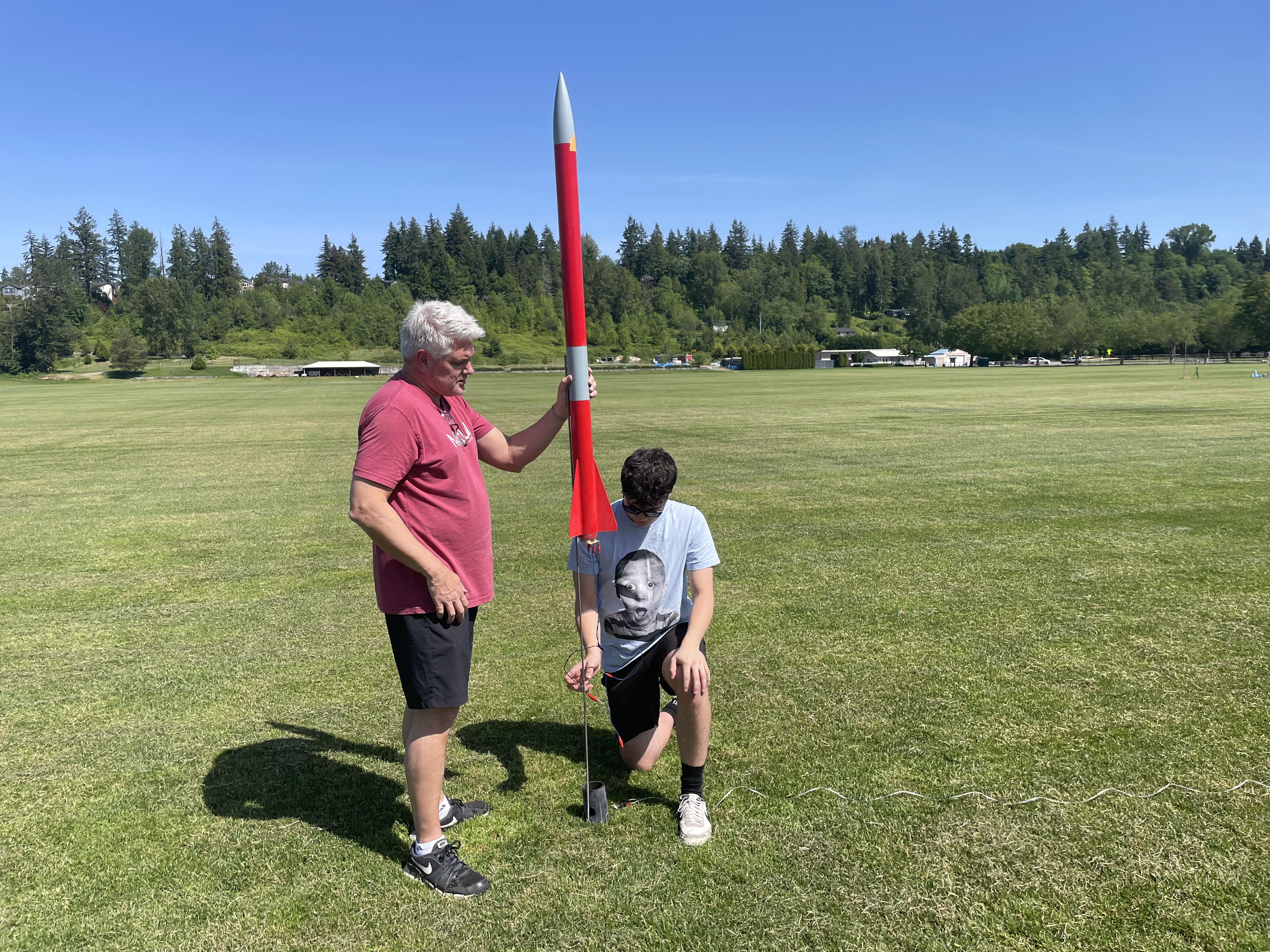
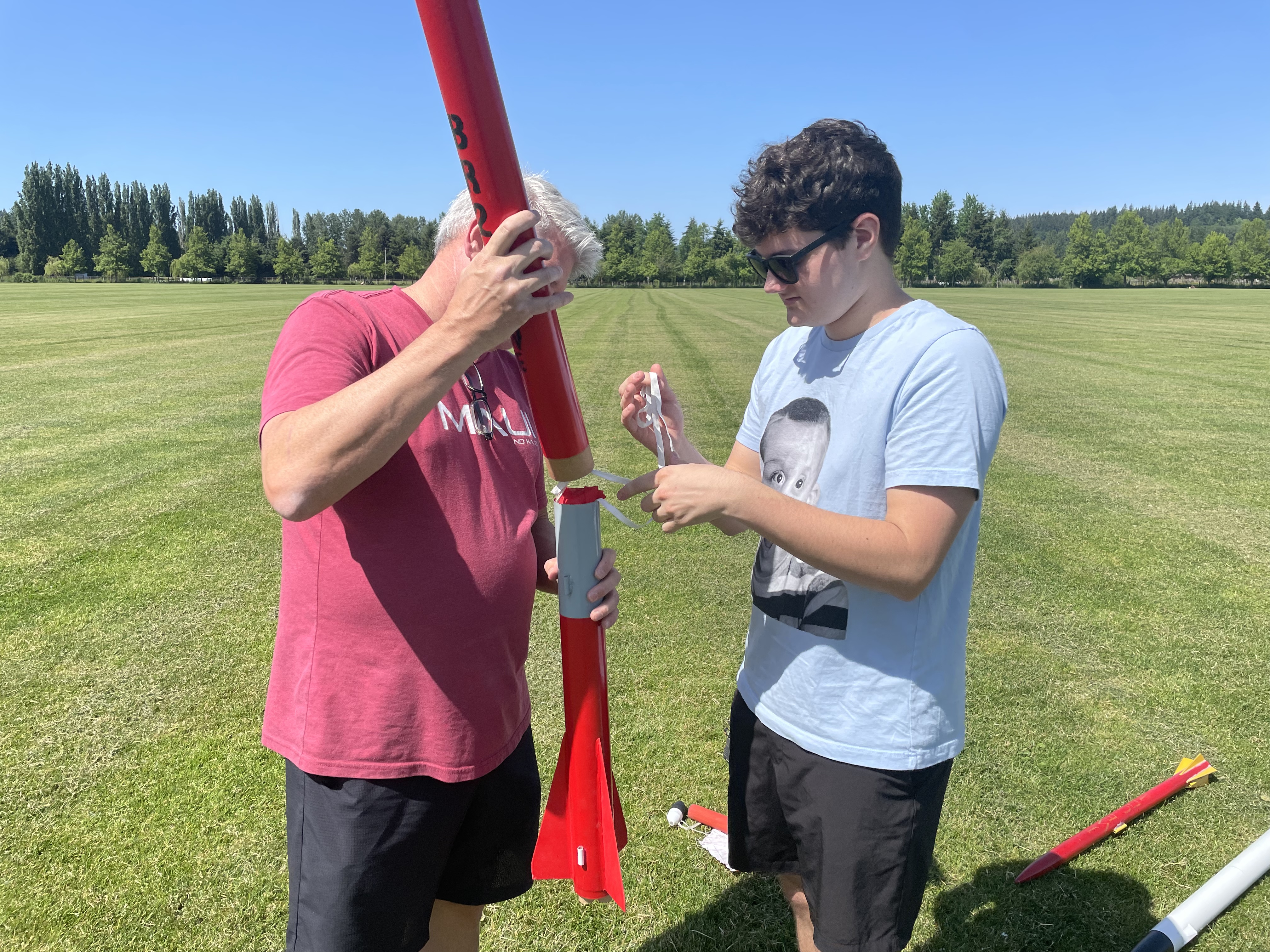
The first airframe stood over six feet tall and flew on three E16-6 motors. For onboard video I took apart a drone camera and stripped it down to the camera and recorder.
The first attempt reached around 800 feet — short of the 1,000 foot goal. I redesigned the motor mount as a 3D printed part and, across several iterations, made the rocket progressively shorter, rebalancing the center of gravity against the center of pressure each time to keep it stable. The shortened, lighter airframe broke 1,000 feet.
I eventually lost BR-1 to high-altitude winds, which set the goal for the next one.
BR-2
Target: 1,500 feet, with better video and recovery I could actually count on.
For video I stripped down an off-brand action camera to just the camera and recorder — noticeably cleaner and higher definition than the drone camera in BR-1. For recovery I cut a spill hole in the parachute, trading a faster descent for far less wind drift. Losing BR-1 taught me that a perfect flight you cannot recover is still a failed flight.
BR-2 has flown over fifteen times and still flies today.
JWE
The last airframe carried BR-2's camera but added a 3D printed cowl to clean up airflow around it, plus a fourth E16-6 motor.
I calculated a target of 1,750 feet in OpenRocket. It flew to roughly 1,800.