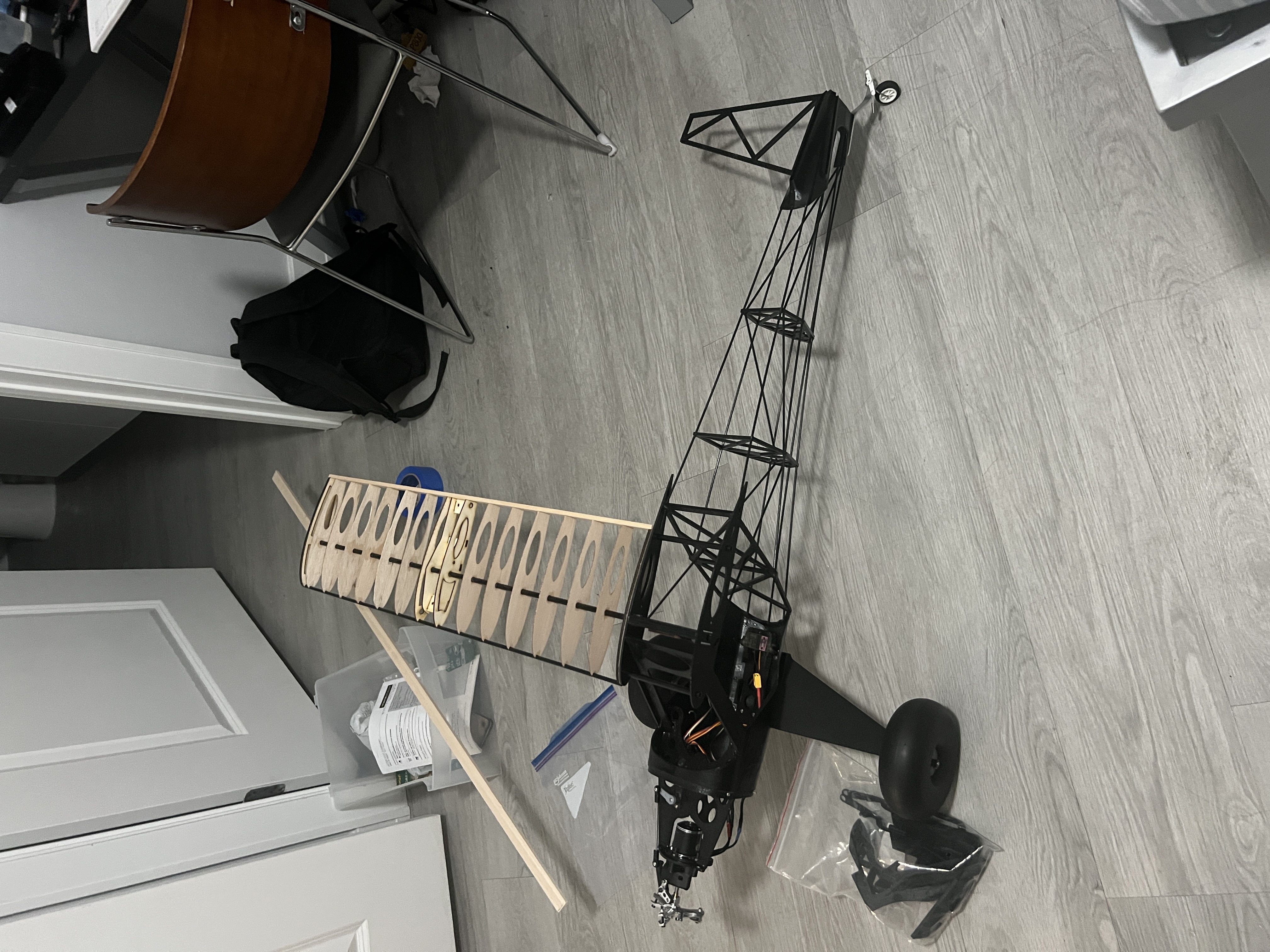
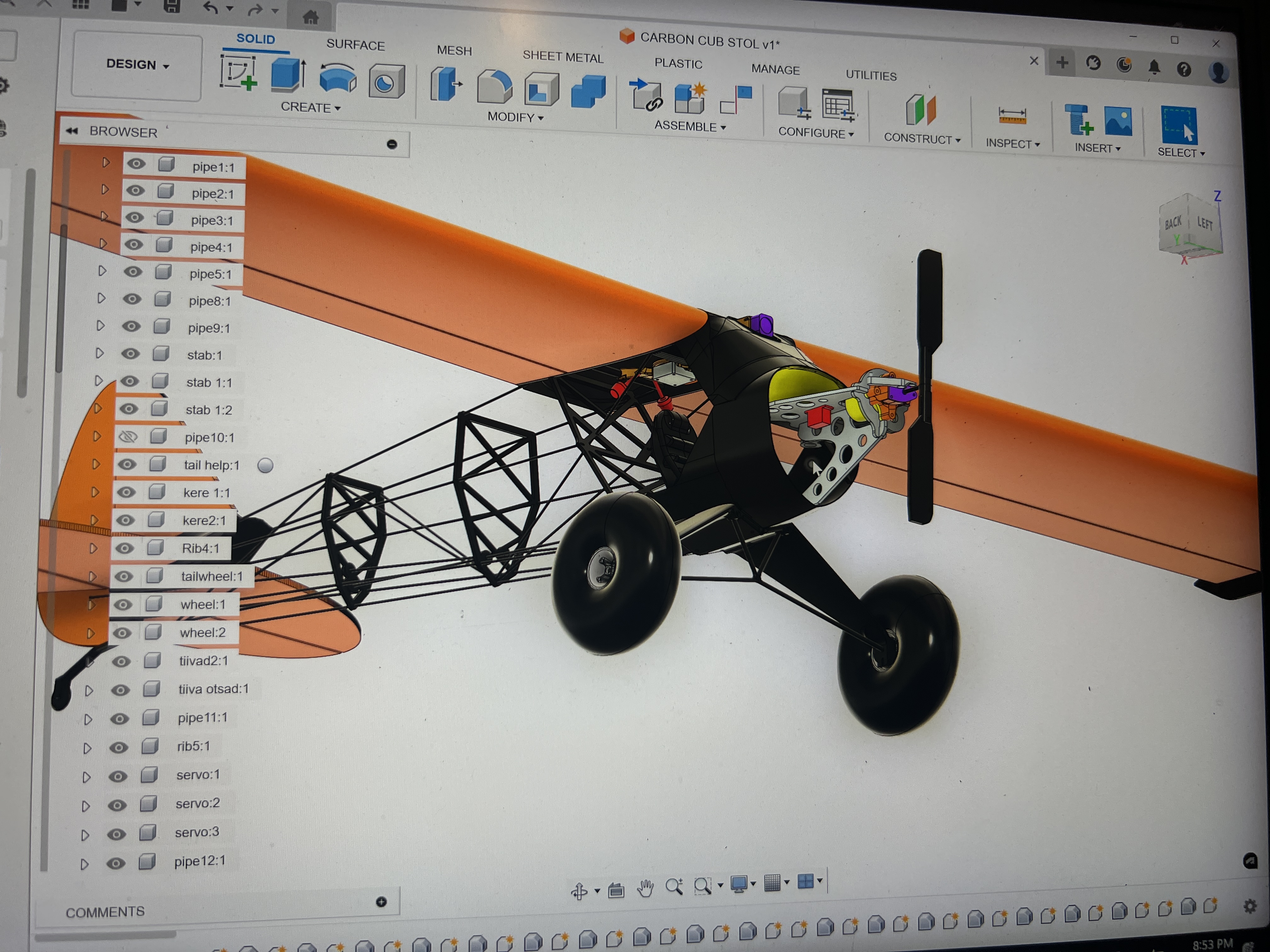
The goal
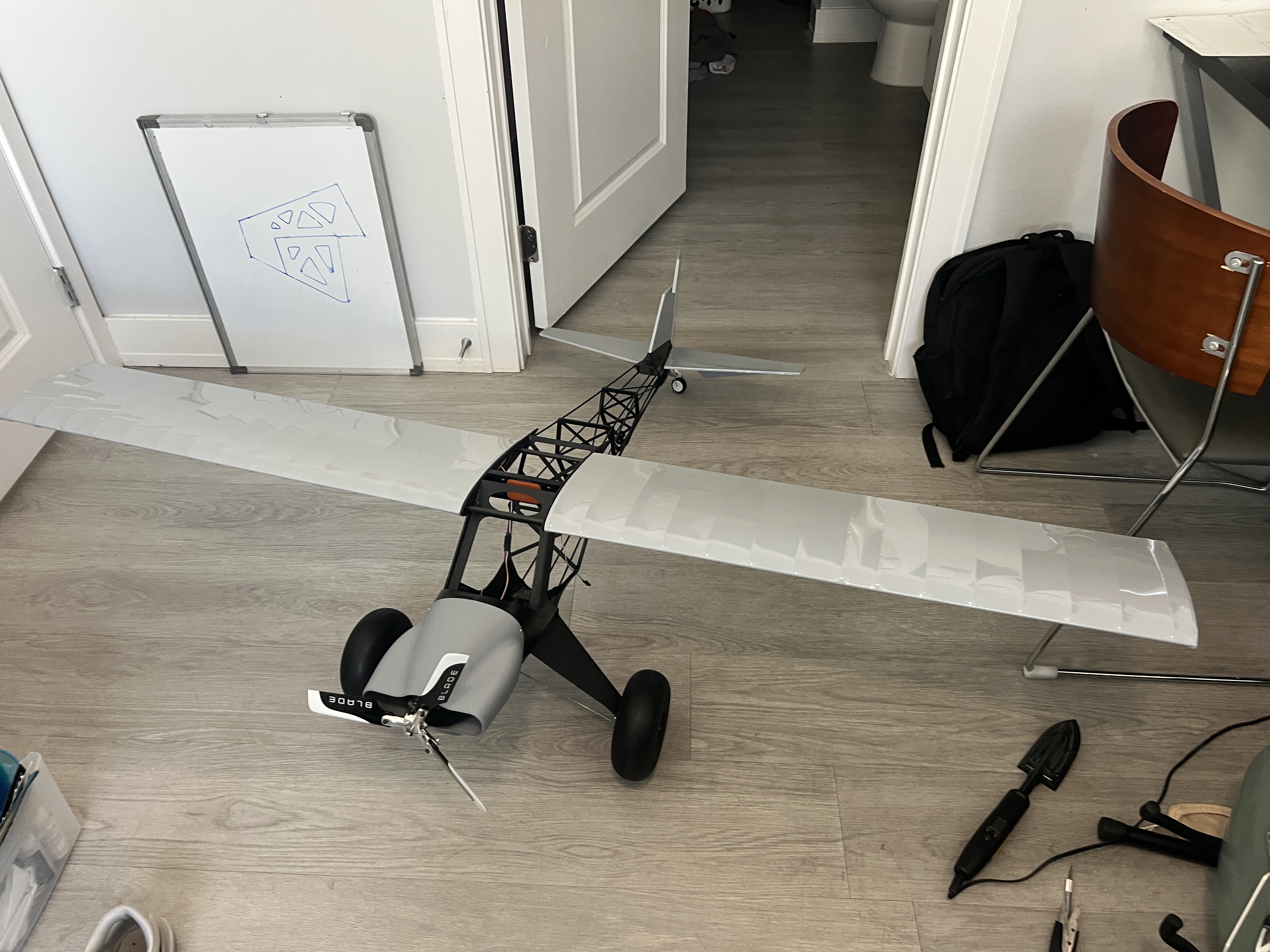
I wanted a high-power short takeoff and landing aircraft built mostly from composites, capable of carrying a payload and running a variable-pitch propeller — something almost nobody does at RC scale. A VPP would let me reverse thrust on landing and cut the rollout dramatically.
Design
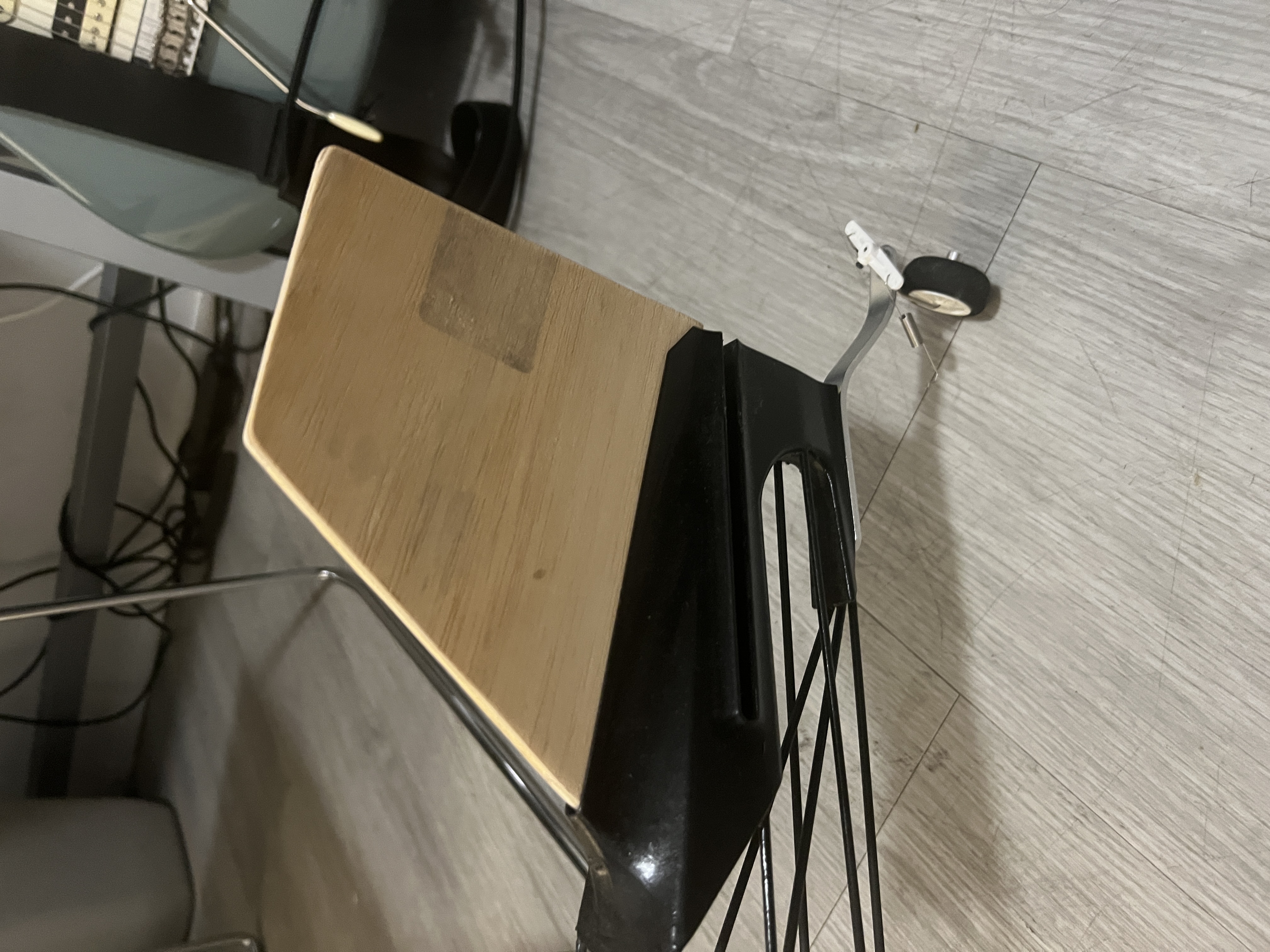
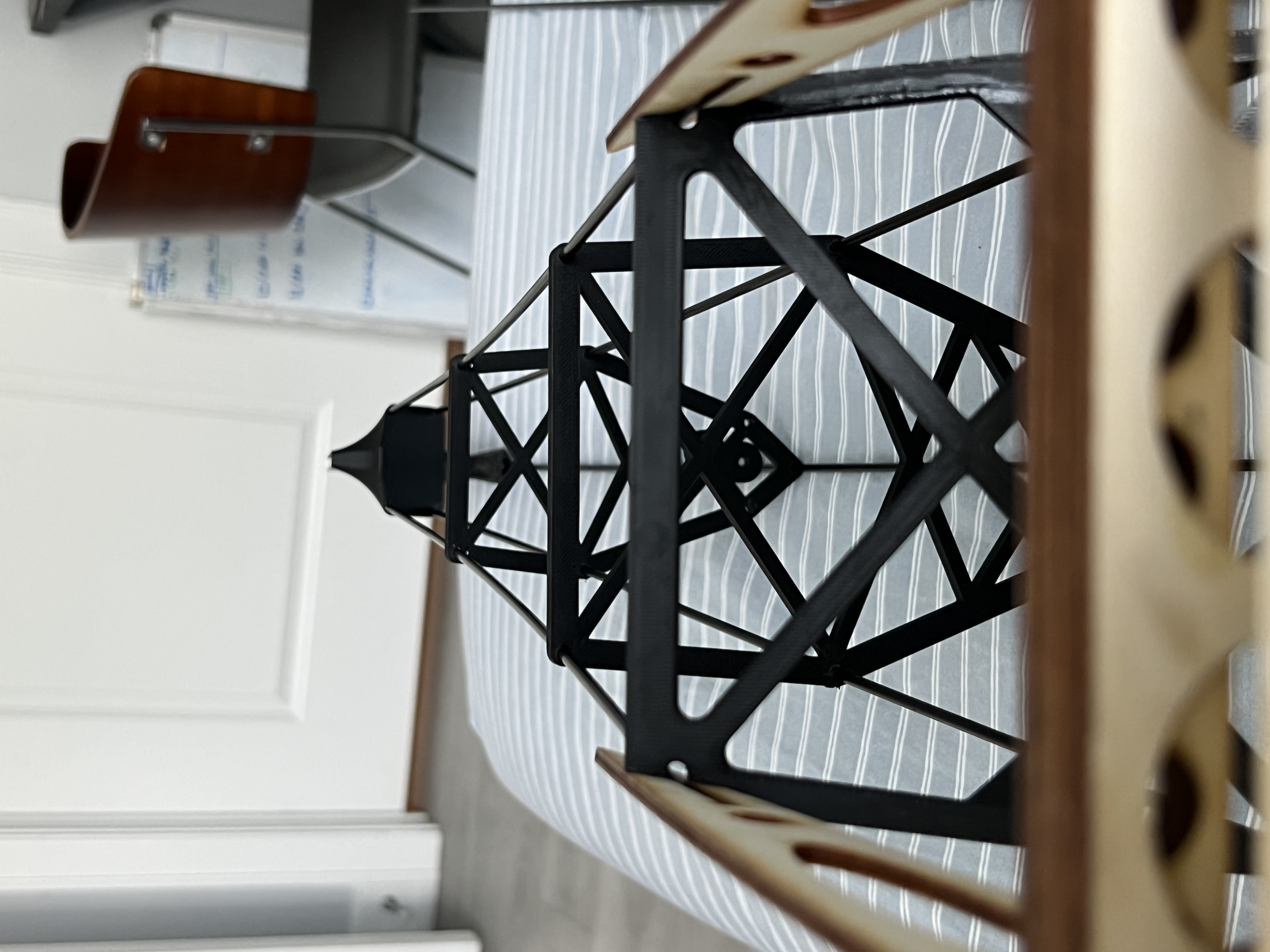
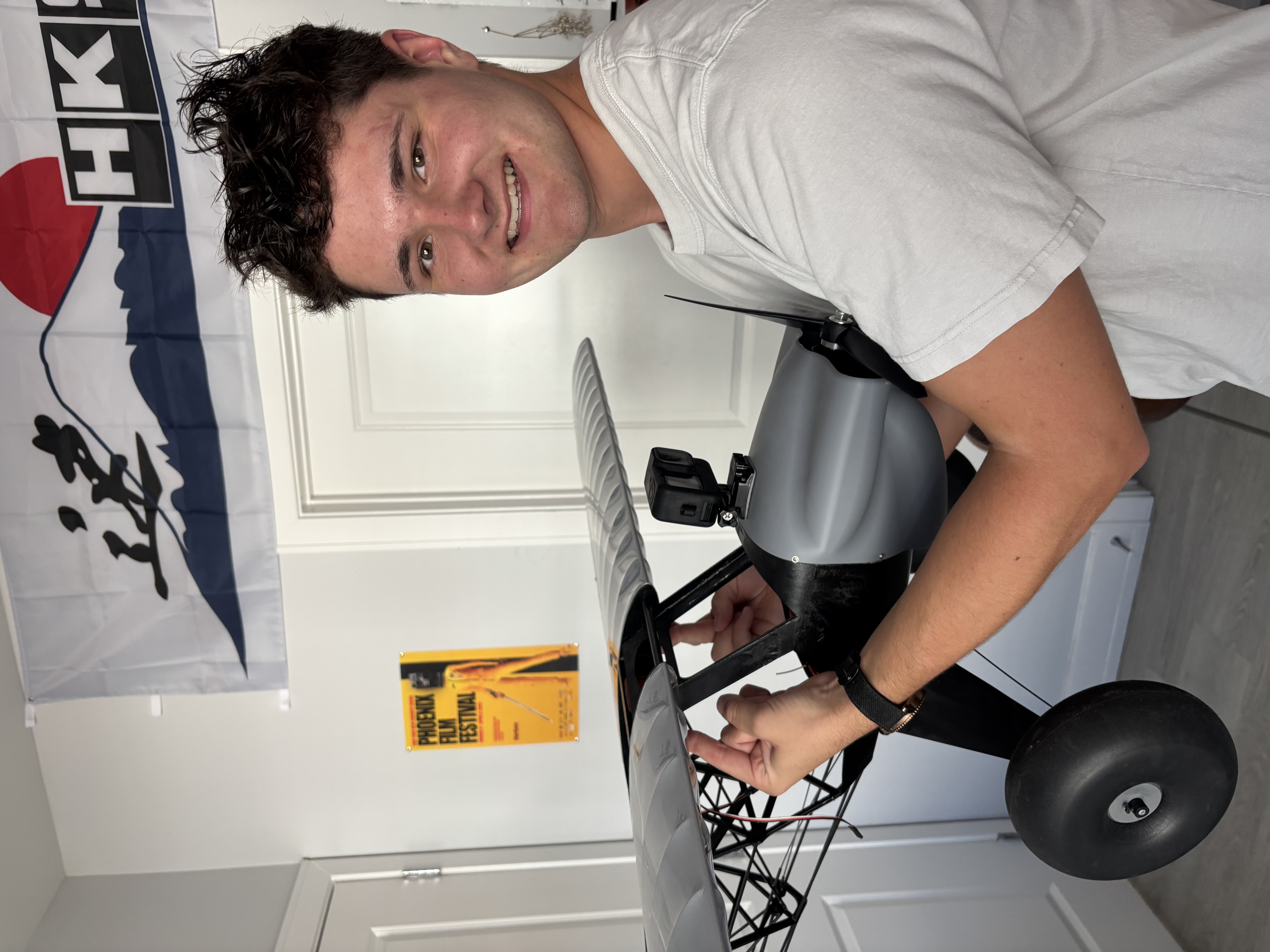
The airframe is built around slow, controllable flight rather than speed. I stretched the wing to a 2 m span to bring the stall speed down, and designed the tail with extra authority specifically for the high-alpha condition on landing, where a conventional RC tail tends to run out of elevator right when you need it.
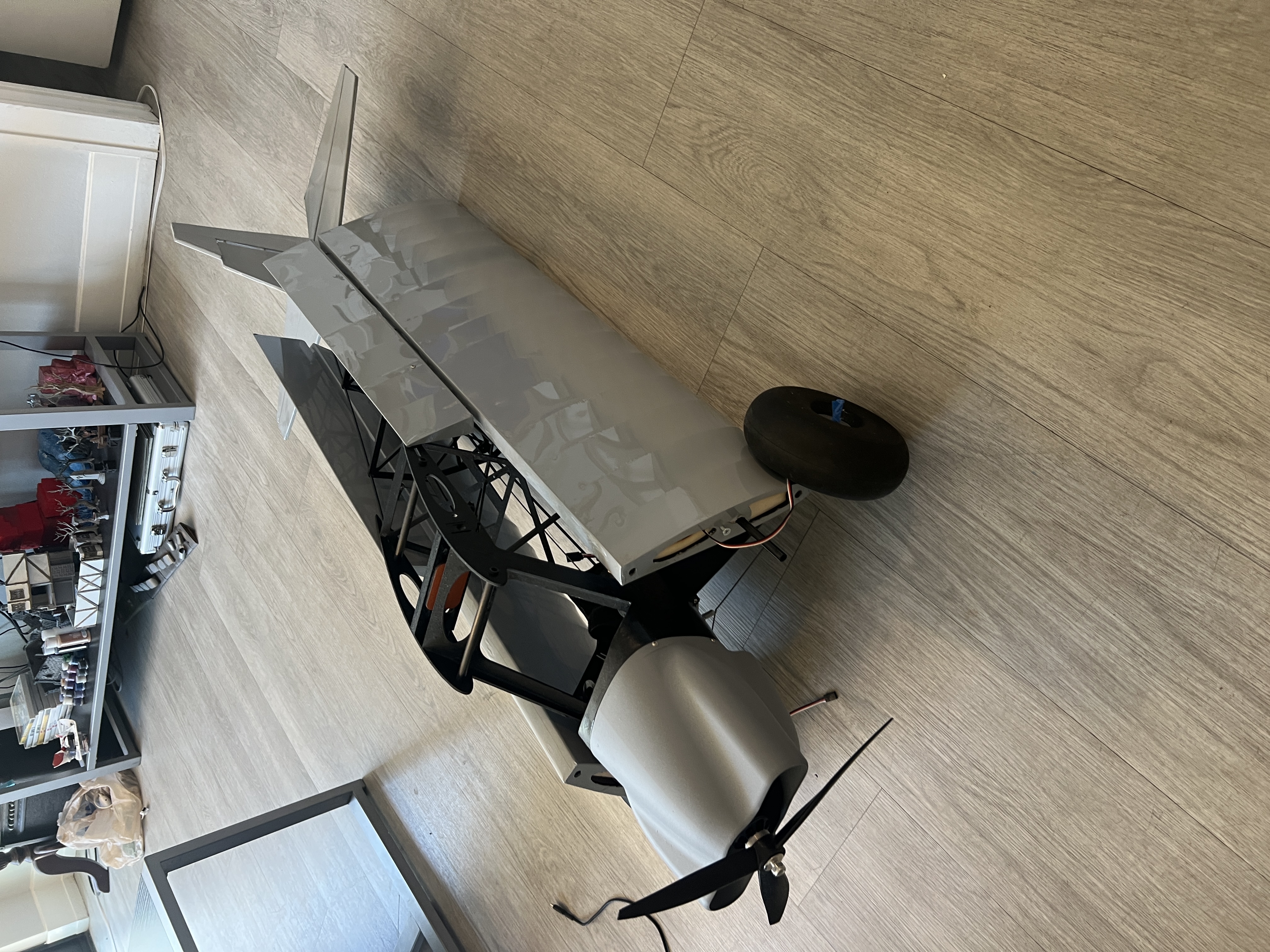
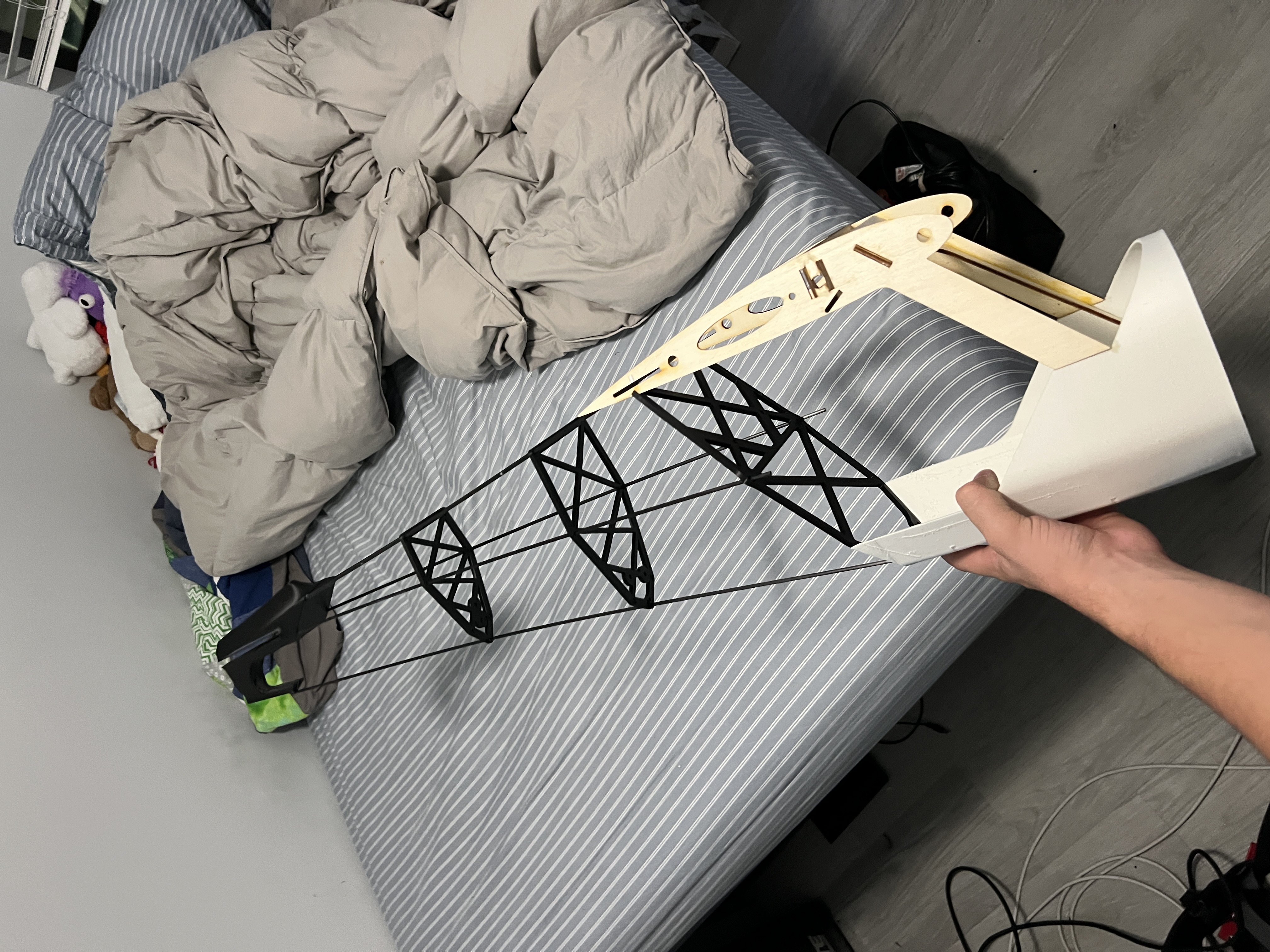
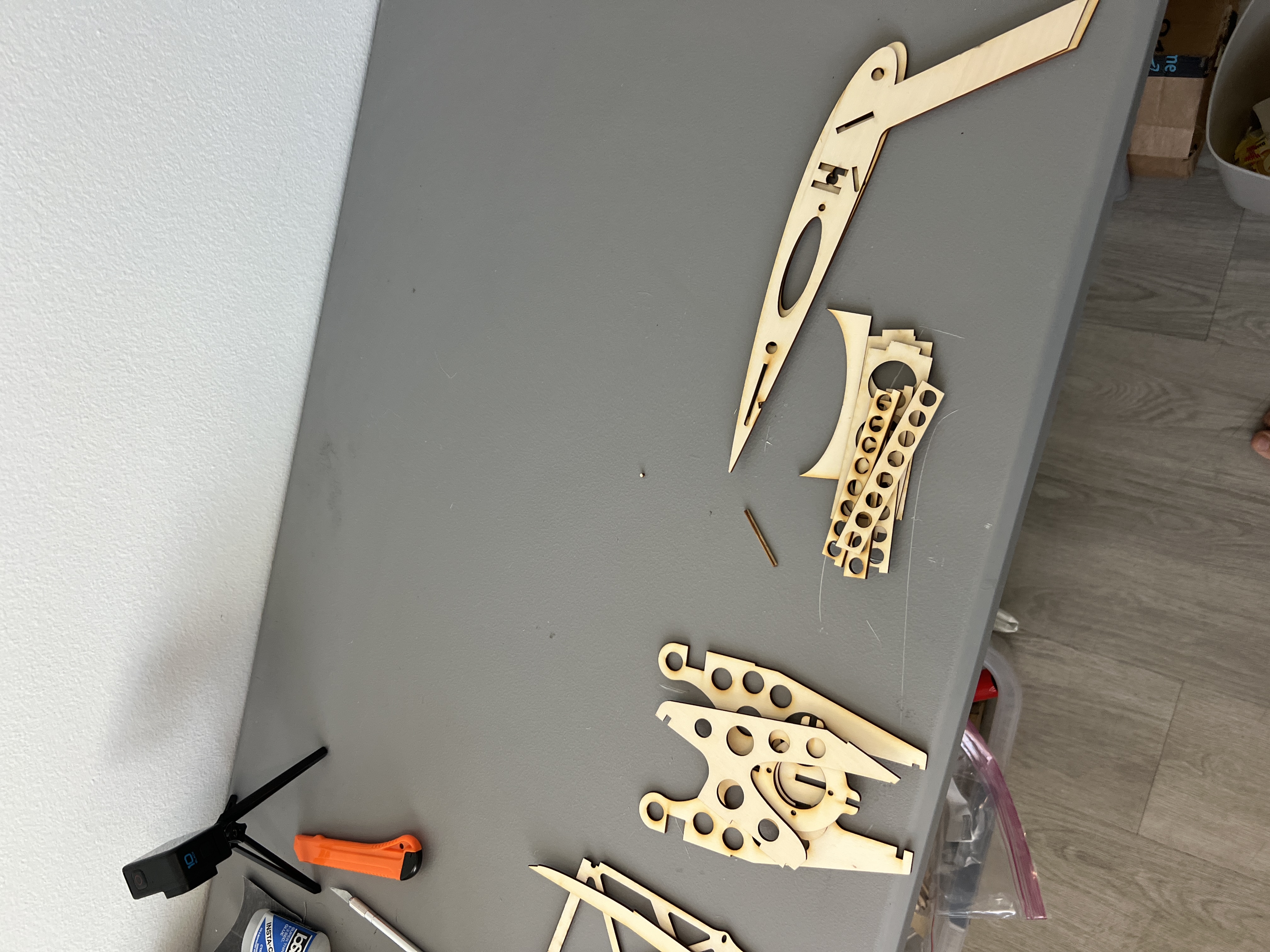
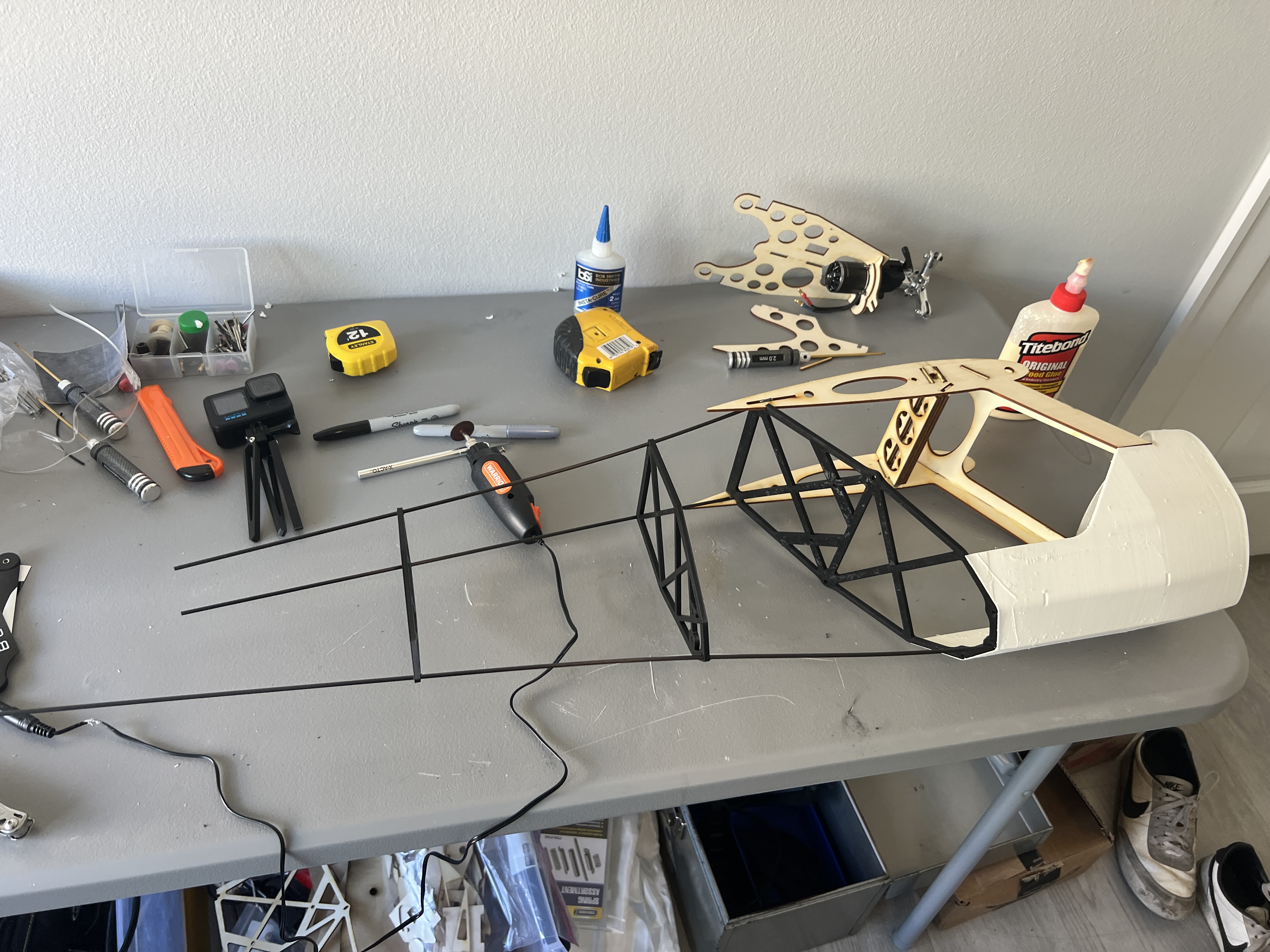
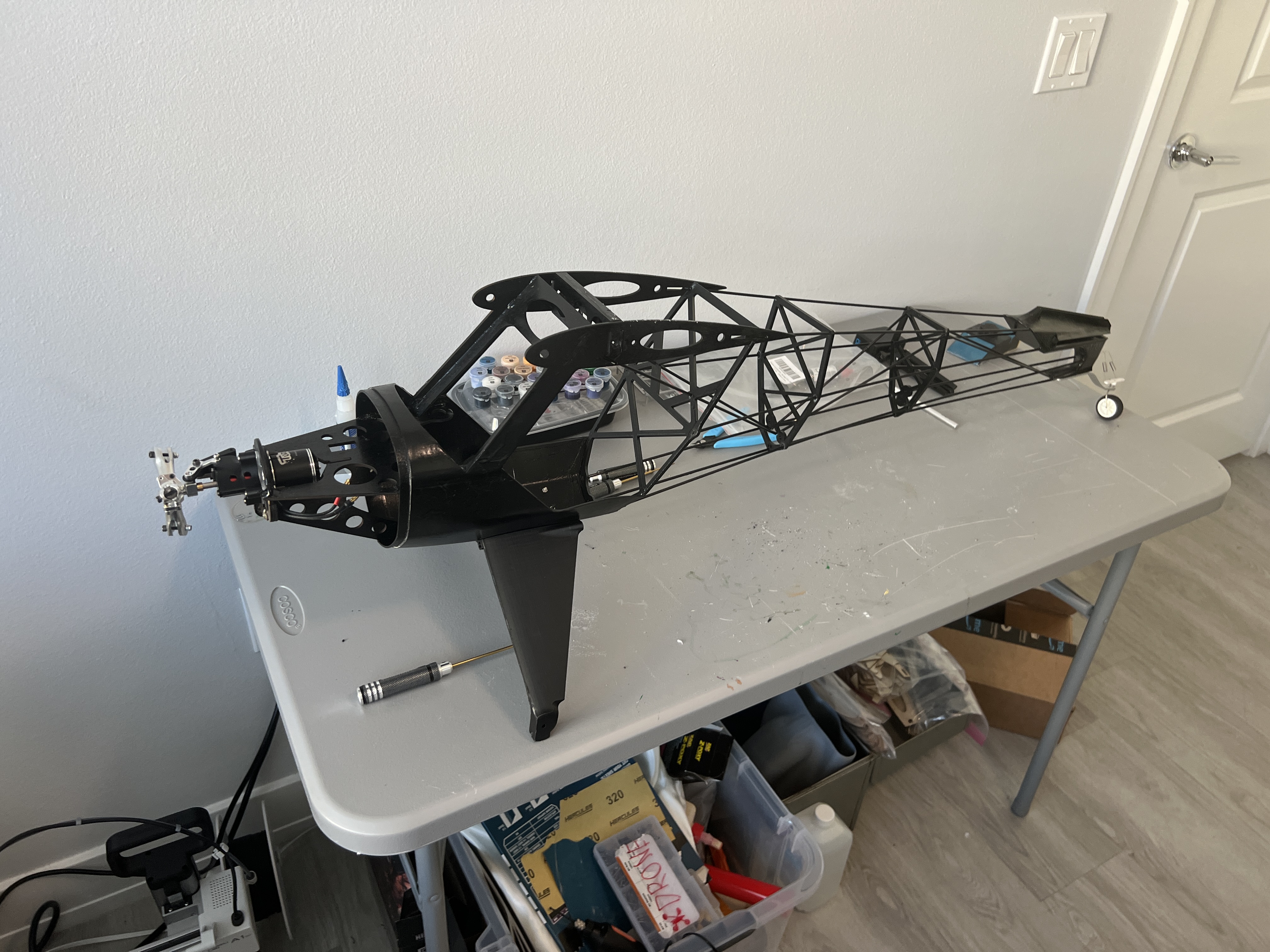
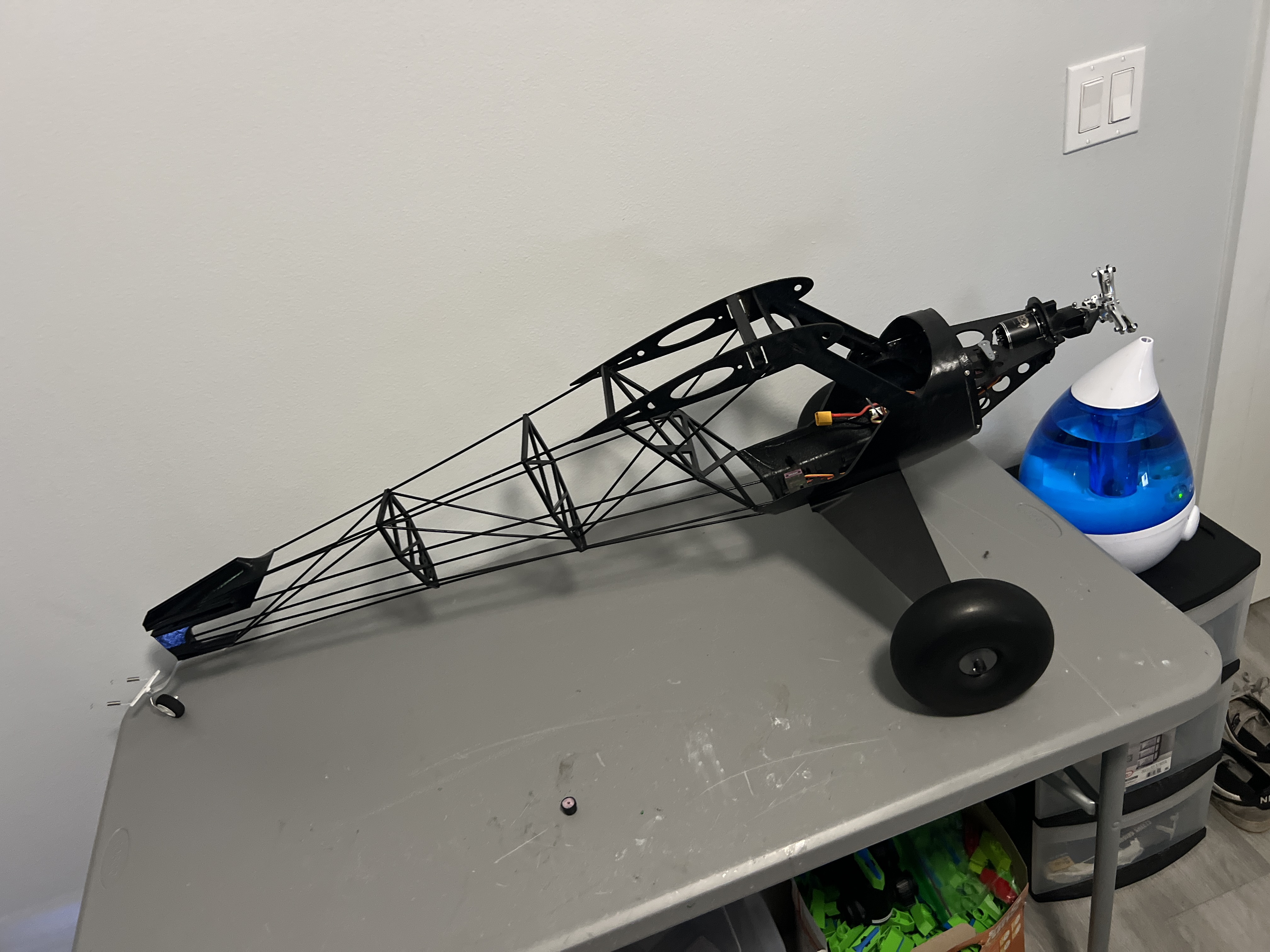
The wings are strutless. That was partly aesthetic and partly practical — it makes setup fast at the field and still lets the wings come off for transport in a car. Carrying that load without struts is what pushed the whole build toward carbon fiber.
I designed the aircraft to accept either the variable-pitch hub or a conventional fixed-pitch propeller, so I could fly it and get a baseline before introducing the complexity of the VPP. It also has optional flaps, and I spent real time on CG placement, which turned out to matter more than I expected.
The variable-pitch propeller
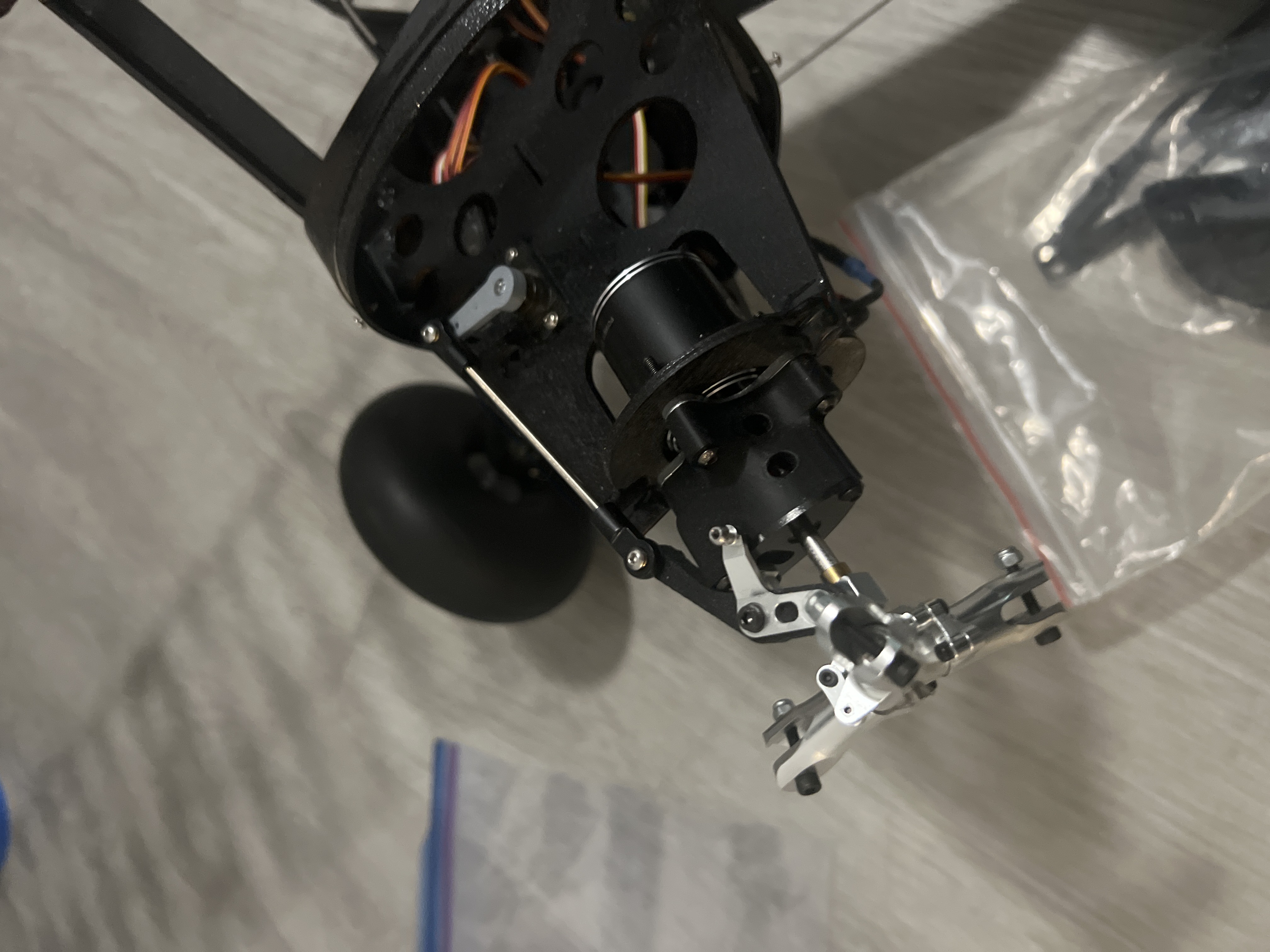
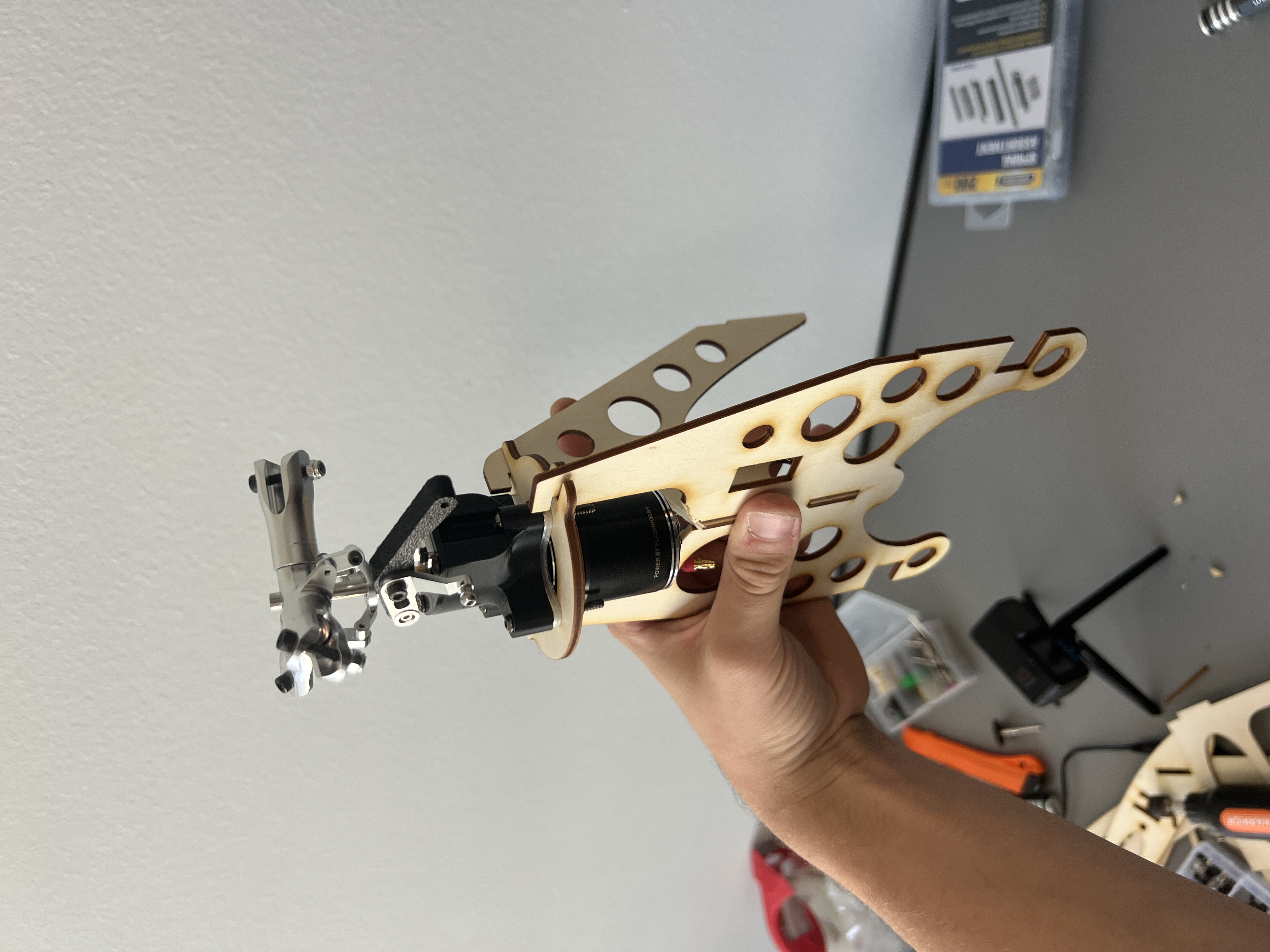
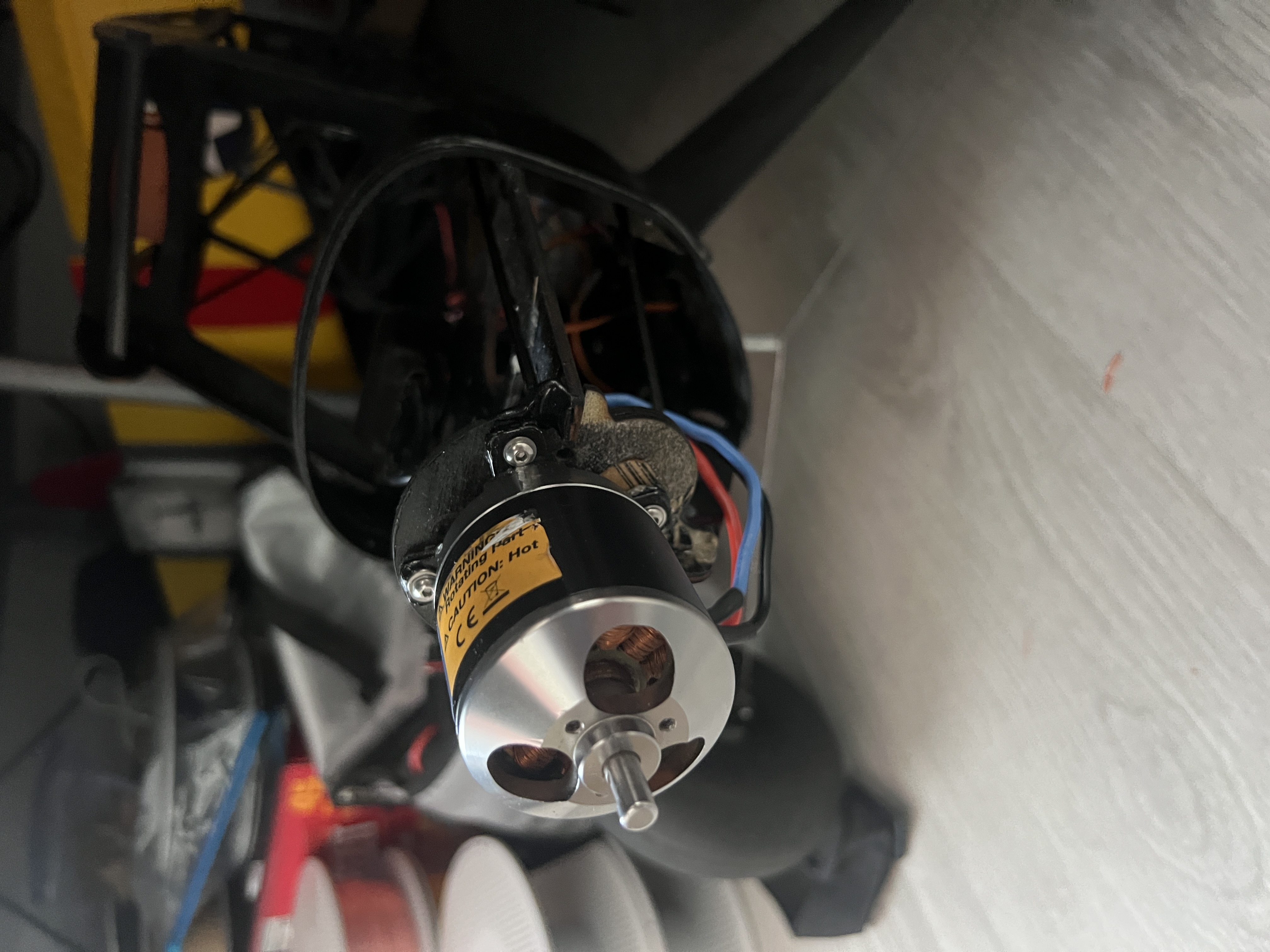
This was the hard part. Making a VPP light enough for a compact airframe is genuinely difficult. I started from a helicopter tail-rotor assembly, took it apart, and reworked it to operate in a forward-thrust orientation, then fitted carbon fiber blades to cut the rotating mass.
Control comes from a servo driving the hub through a linkage. The linkage geometry had to be exact, so I built it from a threaded rod with a custom 3D printed arm — the threaded rod let me tune the length precisely instead of guessing and reprinting.
Composites
I had never worked with carbon fiber or done a layup before this project. I expected that to be the wall I hit. It turned out to be the most approachable part of the build once I started — the learning curve was much shorter than the propeller mechanism.
First flight
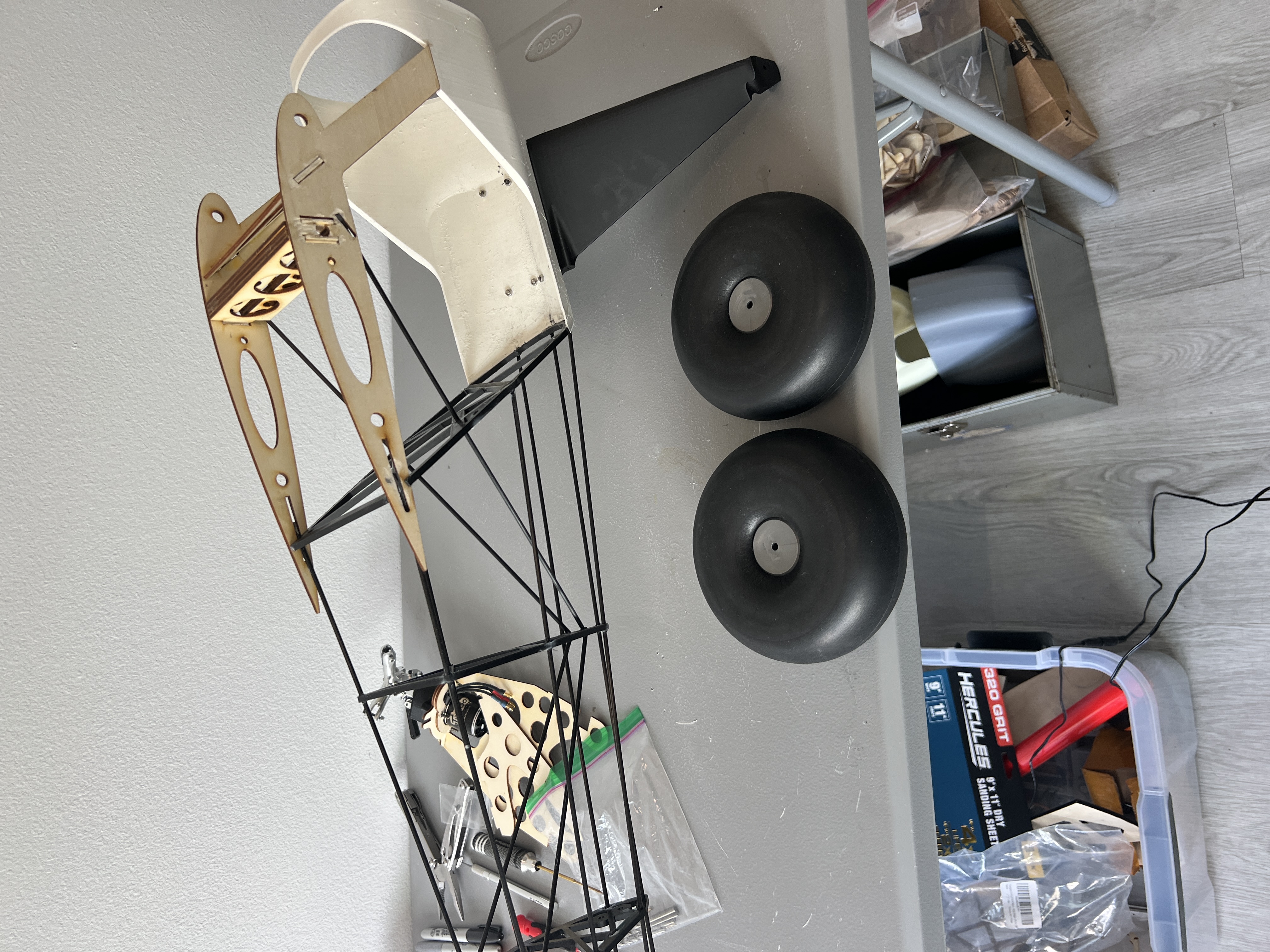
Preflight found a wheel collar had fallen off. I made a replacement out of tape and a zip tie and flew anyway.
Once airborne it was immediately clear the CG was too far aft. Flipping the motor for the VPP had loaded the tail more than I had accounted for, and the aircraft was on the edge of controllable. I carried extra power and came in fast deliberately, because a slow approach risked a stall I would not recover from. It landed without damage.
On the second flight I moved the battery forward, putting the CG just behind the wing midpoint. That flight was what the airplane was designed to do — a genuinely short landing rollout, controllable throughout.